Seated Statue of Gudea
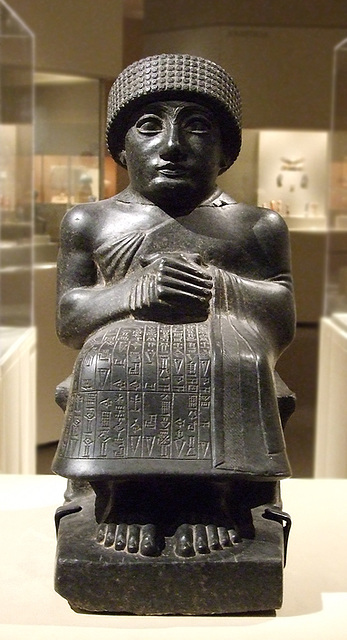
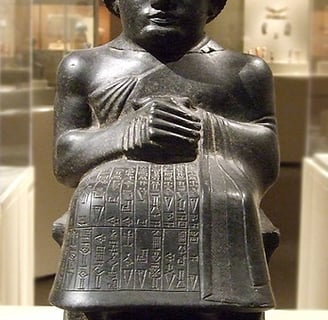
The Seated Statue of Gudea represents Gudea, the ruler (ensi) of the state of Lagash in Southern Mesopotamia. The statue depicts Gudea seated with his hands clasped in a gesture of prayer or piety. The figure is characterized by its muscular arms, detailed facial features, and a calm, serene expression. The statue is inscribed with cuneiform text, providing information about Gudea and his accomplishments.
5/30/20231 min read
Seated Statue of Gudea
Form:
Description: The Seated Statue of Gudea represents Gudea, the ruler (ensi) of the state of Lagash in Southern Mesopotamia. The statue depicts Gudea seated with his hands clasped in a gesture of prayer or piety. The figure is characterized by its muscular arms, detailed facial features, and a calm, serene expression. The statue is inscribed with cuneiform text, providing information about Gudea and his accomplishments.
Example: This statue is one of many that Gudea commissioned to be placed in temples throughout his city-state to demonstrate his devotion to the gods and his role as a pious leader.
Style: Neo-Sumerian art. The statue is representative of the artistic style of the Neo-Sumerian period, characterized by idealized yet realistic depictions of rulers, detailed carvings, and inscriptions.
Origin: Originated from Lagash, an ancient city-state located in present-day Iraq.
Period:
The statue dates back to around 2090 BCE, during the Neo-Sumerian period, specifically the time of the Second Dynasty of Lagash. This period is known for a resurgence in Sumerian art and culture after the fall of the Akkadian Empire.
Materials:
The statue is carved from diorite, a very hard and durable stone. The use of diorite reflects the importance and permanence of Gudea's reign and the high value placed on these works. Diorite was a costly material, often imported from distant regions, indicating the wealth and power of the state of Lagash.
Technique
Carving: Intricately carved from diorite stone.
Polishing: Surface meticulously polished to smoothness.
Inscription: Cuneiform text incised on surface.
Theme
Devotion: Depicts Gudea's prayerful posture.
Authority: Emphasizes strength and wisdom.
Divine: Shows Gudea’s divine relationship.