Roman Wall Painting from Room H of the Villa of P. Fannius Sinistor at Boscoreale (ca. 50-40 B.C.)
The painting is a large fresco that covers the walls of Room H in the Villa of P. Fannius Sinistor. It features a continuous composition that creates an illusion of architectural spaces extending beyond the actual walls. The scenes include architectural elements, landscapes, and possibly mythological figures, arranged to create a panoramic effect.
3/10/20232 min read
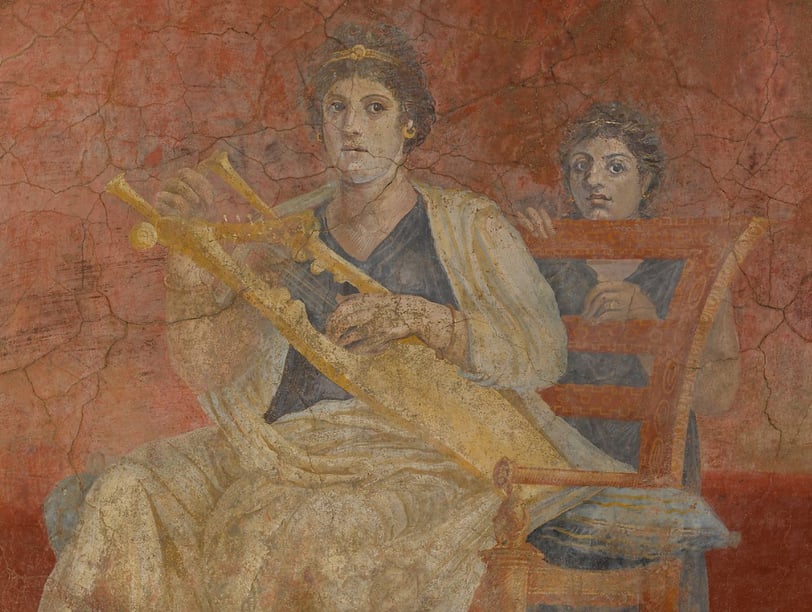
Roman Wall Painting from Room H of the Villa of P. Fannius Sinistor at Boscoreale (ca. 50-40 B.C.)
Form
The painting is a large fresco that covers the walls of Room H in the Villa of P. Fannius Sinistor. It features a continuous composition that creates an illusion of architectural spaces extending beyond the actual walls. The scenes include architectural elements, landscapes, and possibly mythological figures, arranged to create a panoramic effect.
Style
Second Pompeian Style, also known as the Architectural Style. This style is characterized by its use of illusionistic architectural vistas, creating the impression of three-dimensional space on flat surfaces. The style employs perspective to enhance the depth and realism of the depicted scenes.
Origin
The fresco originates from the Villa of P. Fannius Sinistor at Boscoreale, a Roman villa near Pompeii, Italy. This villa was buried and preserved by the eruption of Mount Vesuvius in 79 A.D.
Period
The fresco dates to around 50-40 B.C., during the late Republic period of Rome. This era is noted for its significant advancements in art and architecture, influenced by Hellenistic traditions and Roman innovations.
Materials
The fresco was created using mineral-based pigments applied on a wet lime plaster surface. Common pigments included red and yellow ochres, carbon black, lime white, and copper-based greens and blues. These materials were mixed with water and applied to the plaster, which was still wet to ensure the pigments bonded with the surface as it dried.
Technique
The fresco technique, specifically fresco secco (dry fresco), was used. This involved applying pigments mixed with water to a thin layer of wet plaster. As the plaster dried, it absorbed the pigments, resulting in a durable and vibrant surface. The use of perspective and foreshortening in the painting helps to create a sense of depth and three-dimensional space.
Theme
The fresco's primary theme is architectural illusionism, depicting detailed architectural vistas with columns, entablatures, and other structures to create the illusion of looking through the walls into another space. Additional themes may include mythological scenes, landscapes, and representations of daily life. These elements serve to enhance the opulence and cultural sophistication of the villa's interior, reflecting the owner's status and taste. The paintings also demonstrate the Roman interest in combining art with architecture to transform interior spaces into visually and intellectually stimulating environments.