Parthenon in Athens
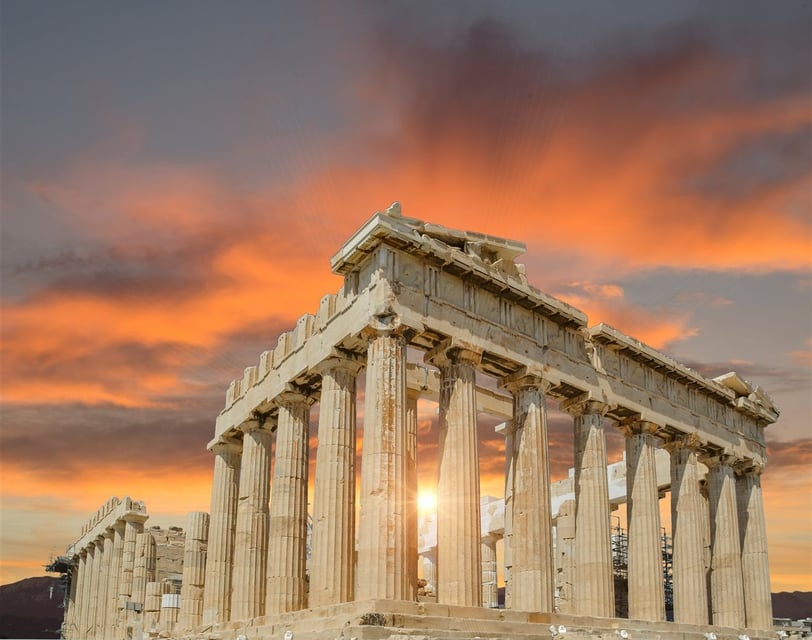
The Parthenon is a rectangular temple with a peripteral colonnade, meaning it is surrounded by a single row of columns. It has a large, inner cella (main chamber) and a smaller room at the back called the opisthodomos. The building is characterized by its Doric columns and detailed sculptural decorations.
2/15/20231 min read
Parthenon in Athens
Form:
The Parthenon is a rectangular temple with a peripteral colonnade, meaning it is surrounded by a single row of columns. It has a large, inner cella (main chamber) and a smaller room at the back called the opisthodomos. The building is characterized by its Doric columns and detailed sculptural decorations.
Style and Origin:
Style: Classical Greek architecture, specifically in the Doric order with some Ionic elements. The Parthenon represents the height of the Doric style and incorporates subtle refinements and optical corrections.
Origin: Constructed during the Athenian Golden Age, it was designed by architects Iktinos and Kallikrates under the supervision of the sculptor Phidias.
Period:
The Parthenon was built between 447 and 432 BCE during the High Classical period of Ancient Greece, under the leadership of Pericles.
Materials:
The primary material used was Pentelic marble, renowned for its pure white appearance and fine grain. The roof was originally made of marble tiles. The sculptural decorations were also crafted from marble, and some elements were originally painted and gilded.
Components:
Peristyle: The surrounding colonnade consisting of 46 outer columns.
Cella (Naos): The main chamber housing the statue of Athena Parthenos.
Pronaos and Opisthodomos: The front and back porches.
Metopes and Frieze: The Parthenon is decorated with high-relief metopes and a continuous frieze that depicts various scenes, including the Panathenaic Procession.
Pediments: The triangular gables at each end of the building, adorned with sculptures representing mythological scenes.
Function:
Function: Originally, the Parthenon served as a temple dedicated to Athena Parthenos, the patron goddess of Athens. It housed a massive chryselephantine (gold and ivory) statue of Athena created by Phidias. Over the centuries, it has also served as a treasury, a Christian church, and an Ottoman mosque.