Painting on Terracotta vase Greek, 6th-4th century BC
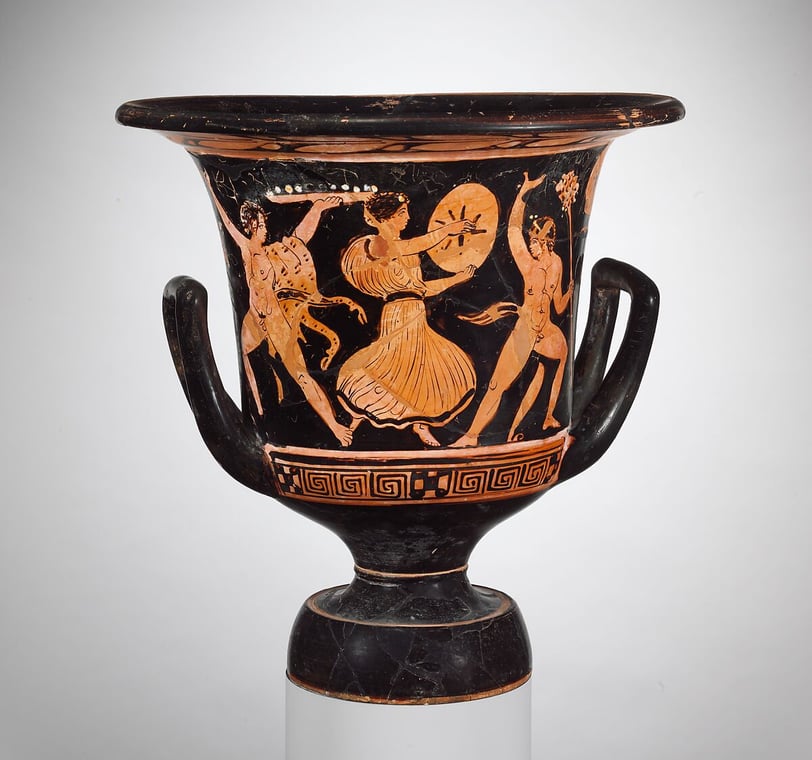
Greek terracotta vases from the 6th to 4th century BCE often feature painted scenes in black-figure or red-figure techniques. These vases come in various shapes, including amphorae, kraters, kylixes (drinking cups), and hydriae (water jars). The painted scenes depict a range of subjects, from mythological narratives and daily life to athletic competitions and social gatherings.
3/15/20232 min read
Painting on Terracotta Vase
Form:
Description: Greek terracotta vases from the 6th to 4th century BCE often feature painted scenes in black-figure or red-figure techniques. These vases come in various shapes, including amphorae, kraters, kylixes (drinking cups), and hydriae (water jars). The painted scenes depict a range of subjects, from mythological narratives and daily life to athletic competitions and social gatherings.
Example: Notable examples include amphorae depicting scenes of the Trojan War or Dionysian revelries, kraters showing symposium scenes, and kylixes with athletic events.
Style and Origin:
Style: The vases are decorated using either the black-figure technique (where figures are painted in black slip on the natural red clay background) or the red-figure technique (where the background is filled in black, leaving the figures in the natural red of the clay). The black-figure technique was predominant in the 6th century BCE, while the red-figure technique became more popular in the 5th and 4th centuries BCE.
Origin: These vases originate from various parts of Greece, particularly from Athens, which was the leading center for pottery production and innovation during this period.
Period:
Period: The vases date from the Archaic to the Classical periods of Greek art 6h to 4th century B.C.. This era saw significant developments in artistic techniques and styles, reflecting the cultural and social changes of the time.
Materials:
Materials: The vases are made of terracotta, a type of earthenware clay. The decoration involved the use of slips (liquid clay) and pigments derived from natural minerals. The firing process involved multiple stages, including an oxidizing phase, a reducing phase, and a final re-oxidizing phase, which helped achieve the distinctive black and red figures.
Technique
Red-figure: The process was reversed, with the background painted black and the figures left in red. This technique allowed for greater flexibility and detail in depicting the human form and movement. Fine brushes were used to add details, creating more lifelike and expressive figures.
Theme
The themes depicted on these vases are varied, reflecting different aspects of Greek life and mythology:
Mythological scenes: Depictions of gods, heroes, and mythological events, such as the labors of Heracles or the adventures of Theseus.
Daily life: Scenes of everyday activities, including athletic competitions, banquets, and domestic chores.
Social gatherings: Depictions of symposia (drinking parties), where figures are shown reclining and engaging in conversation or music.
Athletics: Representations of athletic contests, such as those held during the Olympic Games, highlighting the Greek admiration for physical prowess and competition.