Hegeso - Athens
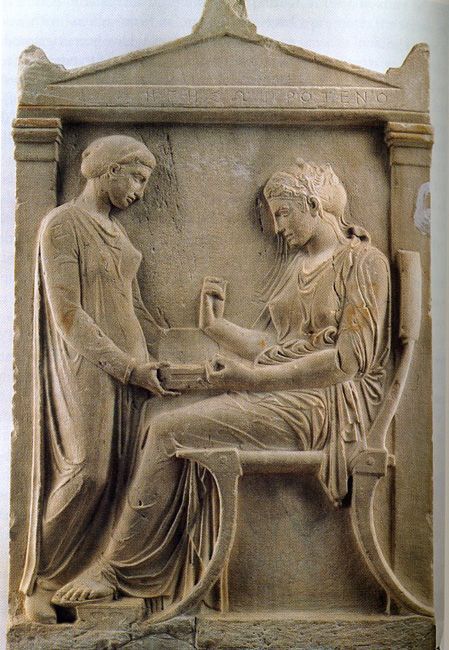
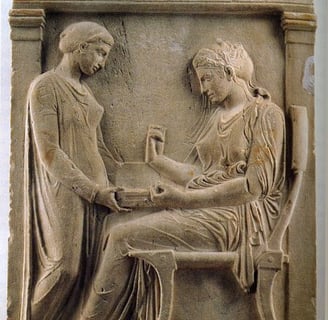
The Grave Stele of Hegeso is a marble relief sculpture depicting a seated woman, Hegeso, examining a piece of jewelry handed to her by a standing servant girl. The composition is enclosed within a naiskos (small temple-like structure), giving the impression of a private, intimate scene. The figures are elegantly carved, with detailed attention to the drapery and expressions.
5/15/20231 min read
Grave Stele of Hegeso
Form:
The Grave Stele of Hegeso is a marble relief sculpture depicting a seated woman, Hegeso, examining a piece of jewelry handed to her by a standing servant girl. The composition is enclosed within a naiskos (small temple-like structure), giving the impression of a private, intimate scene. The figures are elegantly carved, with detailed attention to the drapery and expressions.
Style: Classical Greek art. The stele exemplifies the High Classical style, characterized by idealized yet naturalistic representations of the human form, intricate detailing of drapery, and a sense of calm and dignity.
Origin: Created in Athens, Greece, during the late 5th century BC, a time when funerary stelae were commonly used to commemorate the deceased.
Period:
Period: The Grave Stele of Hegeso dates to around 400 BCE, during the High Classical period of Greek art. This period is noted for its advancements in realism and idealized beauty in sculpture.
Materials:
The stele is carved from Pentelic marble, known for its fine grain and pure white quality, which allowed for detailed and delicate carving. The use of marble also indicates the wealth and status of the deceased's family.
Technique
Carving: Intricately carved from marble.
Relief: High relief for depth effect.
Detailing: Fine details on drapery and figures.
Theme
Domestic Life: Depicts Hegeso with servant.
Status and Wealth: Highlights elite social status.
Funerary Commemoration: Honors the deceased's memory.