Figure of Isis with Horus
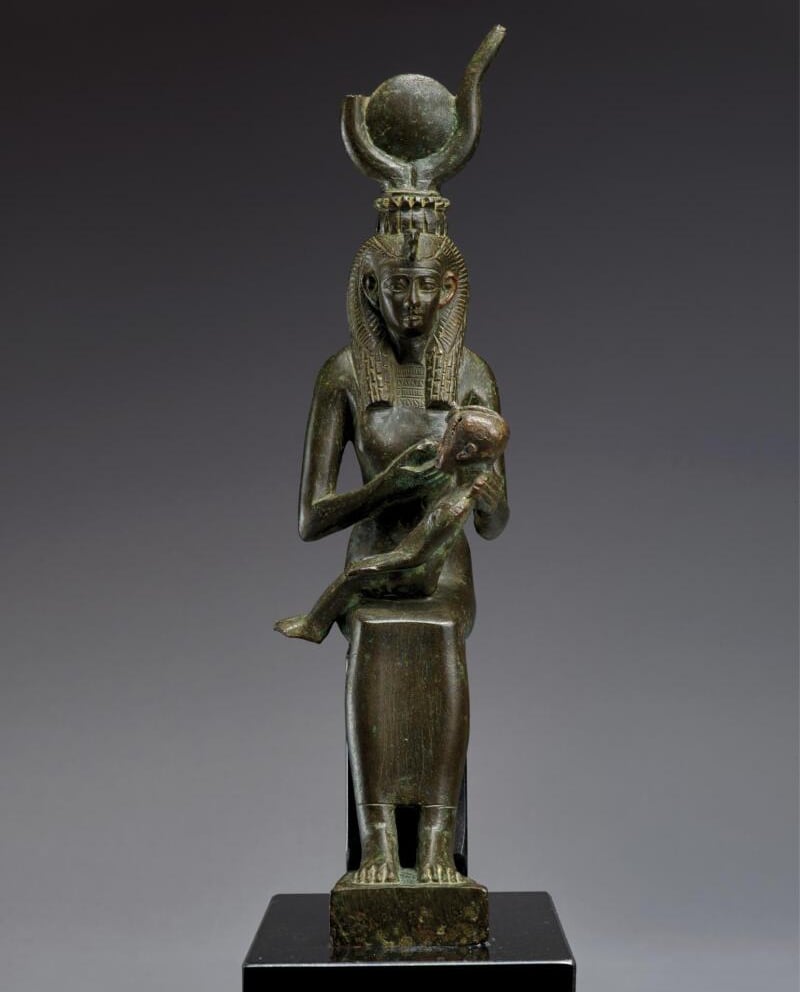
The bronze figure depicts the goddess Isis seated and nursing her son Horus. Isis is shown wearing the typical headdress of a throne or a sun disk with cow's horns. Horus is depicted as an infant seated on Isis's lap. The statue exudes a sense of calm and nurturing, characteristic of Isis's role as a protective mother.
5/20/20231 min read
Isis with Horus
Form:
The bronze figure depicts the goddess Isis seated and nursing her son Horus. Isis is shown wearing the typical headdress of a throne or a sun disk with cow's horns. Horus is depicted as an infant seated on Isis's lap. The statue exudes a sense of calm and nurturing, characteristic of Isis's role as a protective mother.
Style:
Late Period Egyptian art. The style is marked by detailed craftsmanship and the use of bronze, which became more common during this period for small statues and amulets.
Origin: This statue originates from Egypt, a time known for a revival of traditional Egyptian art forms and motifs.
Period:
The 25th Dynasty (approximately 747-656 BCE) and the 26th Dynasty (approximately 664-525 BC) are part of the Late Period of ancient Egypt. This era is noted for the Nubian influence during the 25th Dynasty and the Saite Renaissance during the 26th Dynasty.
Materials:
The statue is made of bronze, a metal alloy consisting primarily of copper and tin. Bronze was a preferred material for such figures due to its durability and the fine details it could render. Some statues were gilded or inlaid with precious materials.
Technique
Casting: Bronze cast using lost-wax method.
Polishing: Surface polished for smooth finish.
Detailing: Intricate detailing of figures' features.
Theme
Motherhood and Protection: Isis nurturing infant Horus.
Divine Kingship: Symbolizes royal divine lineage.
Religious Devotion: Depicts gods in pious roles.